
 Plant Management in Florida Waters
Hydrilla
Quick Facts
- Scientific name: Hydrilla verticillata
- Origin: Southeast Asia
- Introduction: Early 1950s, aquarium trade
- Aquatic community: Submersed, surface mats
- Habitat: Inches to >30 feet deep
- Distribution: Statewide
- Management effort: Eradicate new infestations Maintenance control of established plants
- 2020 Acres Treated: 16,100
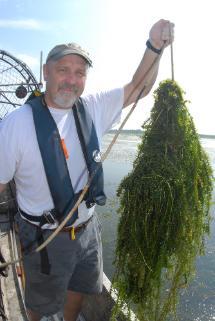
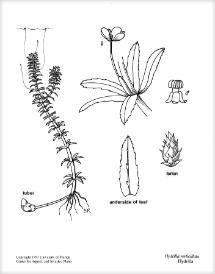

Environmental and Economic Concerns
- Stems can elongate as much as 6-8 inches per day in Florida’s peak growing season
- Can cover entire water body surface 1-2 years after introduction
- 80% of plant mass is in the upper two feet of water column
- blocks sunlight and shades out native plants
- blocks air exchange and consumes oxygen, leading to fish kills
- blocks access, navigation, and recreation
- breaks loose and jams against bridges and dams
- Reduces recreation-based incomes and property values
- Doubles sedimentation rate from senescing leaves and stems
- Disperses by fragments, buds, and runners (does not produce seeds)
- Resists long-term control via underground propagules (tubers)
- millions produced per acre
- no effective tuber control method
- viable tubers lie dormant for as long as seven years
Management Options
- Biological: Sterile grass carp stocked in about 100 public lakes; 4 host-specific insect species released with few successes; FWC is not currently funding overseas exploration for additional host-specific insects
- Chemical: Large-scale: potassium endothall, diquat, bispyribac, fluridone, penoxsulam; topramezone – small-scale: copper, diquat – research is focusing on combinations of herbicides, especially contact type herbicides with systemics
- Mechanical: Harvest from spring runs and boat trails in deep water, harvest or shred mats lodged against structures (bridges, dams)
- Physical: Hand pull / diver dredge new infestations, or in fast-flowing water