
 Plant Management in Florida Waters
Napier grass
Quick Facts
- Scientific name: Pennisetum purpureum
- Origin: Old World, Africa
- Introduction:Early 1900s, forage grass
- Aquatic community: Emergent grass
- Habitat: Shorelines, wet to dry soils
- Distribution: Central and South Florida
- Management effort: Complaint management
- 2020 Acres Treated: 0
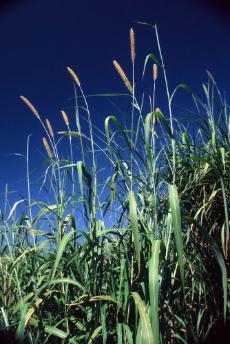
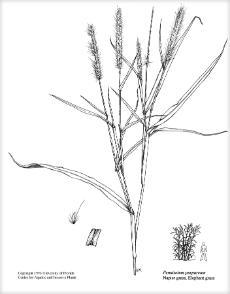
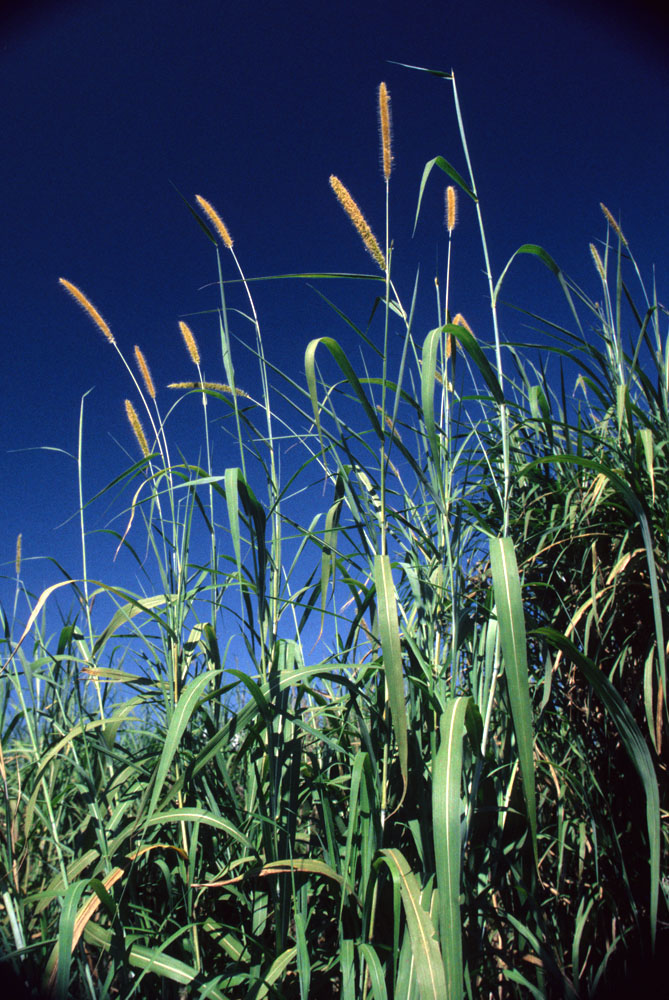
Environmental and Economic Concerns
- Clump-forming grass up to 12 feet tall along shorelines, in wet to dry soils
- Most often in disturbed areas, especially along canal banks
- Tall, dense growths can hinder boat launch or shoreline access
- Hinders flood control by blocking access to canals and impeding water flow
- Deep fibrous root system enables drought resistance, but plant can be injured by freezes
- Propagates vegetatively from root crown divisions or rhizome and stem fragments, especially after mechanical control such as tilling
Management Options
- Biological: None available
- Chemical: Glyphosate, imazapyr
- Mechanical: Mowing; harvest or shred floating mats
- Physical: Drawdown, desiccation, and burning