

West Indian marsh grass
Quick Facts
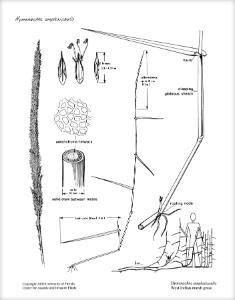
- Scientific name: Hymenachne amplexicaulis
- Origin: Central, South America, West Indies
- Introduction: 1970s, natural colonization (?)
- Aquatic community: Emergent
- Habitat: Wet soils to shallow water
- Distribution: South & Southwest Florida
- Management effort: Maintenance control
- 2020 Acres Treated: 80
Environmental and Economic Concerns
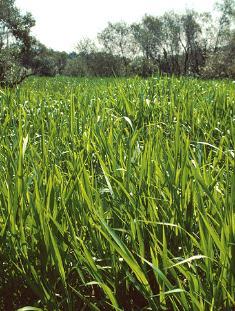
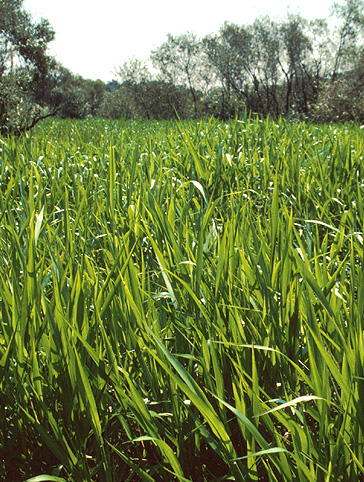
- Forms dense monocultures in marshes and along shorelines
- Displaces native grasses because of its broader tolerance to wet and dry periods
- Difficult to control when growing among native grasses because they are susceptible to the same control methods
Management Options
- Biological: None available
- Chemical: Glyphosate, imazapyr, flumioxazin
- Mechanical: Impractical; plants grow in shallow marshes
- Physical: Fire + glyphosate to control regrowth